
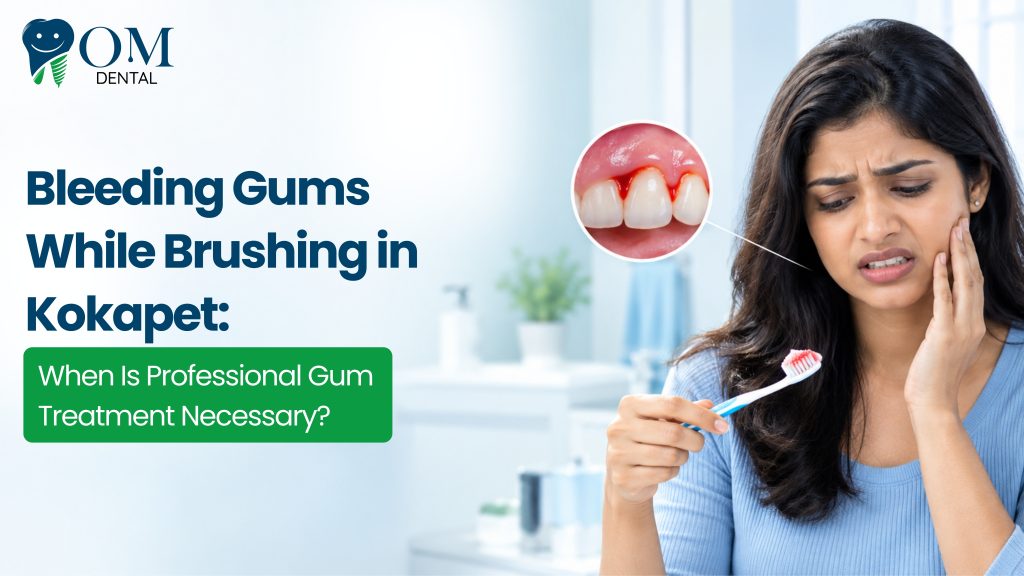
Noticing blood while brushing your teeth can be worrying, especially when it happens regularly. While occasional bleeding may sometimes be related to brushing technique or minor gum irritation, frequent bleeding can be a sign of gum inflammation or an underlying periodontal problem. For people experiencing persistent bleeding gums, professional evaluation can help identify whether the problem can be managed with improved oral hygiene and cleaning or whether more advanced gum treatment in Kokapet may be required.
Healthy gums generally should not bleed during routine brushing or flossing. If you regularly notice blood around your gums, it is important to understand the possible cause and seek professional dental advice when necessary.
Why Do Gums Bleed While Brushing?
Bleeding gums can occur for several reasons. One of the most common causes is plaque buildup around the teeth and gumline. Plaque contains bacteria that can irritate the gums and cause inflammation.
Other possible causes include:
- Poor oral hygiene
- Tartar buildup
- Gingivitis
- Periodontal disease
- Brushing too aggressively
- Using a hard-bristled toothbrush
- Inadequate flossing
- Smoking or tobacco use
- Certain medications
- Hormonal changes
- Vitamin deficiencies
- Ill-fitting dental appliances
If bleeding occurs repeatedly, it is better not to ignore it. A dentist can examine your gums and determine the actual cause.
When Should Bleeding Gums Be Taken Seriously?
Occasional mild bleeding may not always indicate a serious problem. However, frequent bleeding, especially when accompanied by other symptoms, deserves professional attention.
You should consider visiting a dentist if you notice:
- Bleeding every time you brush
- Swollen or red gums
- Tenderness around the gums
- Persistent bad breath
- Gum recession
- Pus around the gums
- Tooth sensitivity
- Pain while chewing
- Loose or moving teeth
- Changes in the way your teeth fit together
These symptoms may indicate that gum inflammation has progressed beyond simple irritation.
Common Gum Problems That Can Cause Bleeding:
Gingivitis
Gingivitis is an early stage of gum inflammation that commonly develops because of plaque buildup. The gums may become red, swollen, and more likely to bleed while brushing or flossing.
At this stage, professional cleaning and improved daily oral hygiene can often help control the condition.
Periodontitis
If gum inflammation is not treated, it can progress into periodontal disease. Periodontitis can affect the tissues and bone supporting the teeth.
Patients may experience deeper gum pockets, persistent bleeding, gum recession, bad breath, and eventually loose teeth.
More advanced conditions may require comprehensive periodontal treatment rather than simple cleaning.
Tartar Buildup
Plaque that remains on the teeth can harden into tartar. Unlike soft plaque, tartar cannot be completely removed through normal brushing.
Professional dental cleaning may be necessary to remove these deposits and help reduce gum irritation.
How Professional Gum Treatment Can Help?
Professional gum treatment begins with identifying the underlying reason for bleeding. Your dentist may examine your teeth and gums and assess areas where plaque, tartar, inflammation, or periodontal pockets are present.
Depending on the condition, treatment may include professional scaling and polishing, deep cleaning, periodontal therapy, or other procedures.
For patients searching for gum treatment in Kokapet, the most suitable treatment should be selected after a dental examination rather than based only on the presence of bleeding.
The Role of Scaling and Polishing:
Professional Scaling and Polishing can be an important part of maintaining healthy gums.
Scaling helps remove plaque and hardened tartar from the teeth and areas around the gumline. Polishing helps clean the tooth surfaces and remove certain surface stains.
For patients with mild gum inflammation, professional cleaning combined with proper home care may significantly improve gum health.
However, patients with deeper periodontal infection may require additional treatment.
When Is Deep Gum Treatment Necessary?
If infection has progressed below the gumline or periodontal pockets have developed, routine cleaning may not be enough.
A dentist may recommend deeper periodontal treatment when there is:
- Significant tartar below the gumline
- Deep periodontal pockets
- Persistent gum bleeding
- Gum recession
- Bone loss around teeth
- Repeated gum infections
- Persistent inflammation despite regular cleaning
The treatment plan depends on the severity of the condition and the overall health of the teeth and gums.
Can Laser Gum Treatment Help With Bleeding?
Modern dental technology provides additional treatment options for selected gum conditions. Laser gum treatment in Kokapet may be considered in certain cases involving infected or inflamed gum tissue.
Dental lasers can be used to target affected areas and reduce bacterial contamination as part of periodontal treatment.
Laser treatment is not necessary for every patient with bleeding gums. Mild gingivitis, for example, may respond well to professional cleaning and improved oral hygiene.
A dentist can determine whether laser-assisted treatment is appropriate after evaluating the gums and periodontal condition.
What Happens During a Professional Gum Examination?
A dental gum examination generally begins with a visual assessment of the gums and teeth. The dentist looks for redness, swelling, bleeding, gum recession, tartar, and other signs of periodontal problems.
The dentist may also assess the depth of spaces around the gums to understand whether periodontal pockets are present.
Depending on the symptoms and clinical findings, dental X-rays may sometimes be recommended to evaluate the supporting bone.
Once the condition has been assessed, the dentist can explain the available treatment options and recommend an appropriate plan.
How to Prevent Bleeding Gums at Home?
Professional treatment is important when gum disease is present, but daily oral care also plays a major role in maintaining healthy gums.
Brush Twice a Day
Use a soft-bristled toothbrush and brush gently for approximately two minutes. Avoid aggressive brushing, which can irritate the gum tissue.
Clean Between Your Teeth
Plaque can remain between teeth even after brushing. Floss or use an appropriate interdental cleaning aid to clean these areas.
Maintain Regular Dental Visits
Routine dental examinations can help identify gum problems before they become advanced.
Avoid Tobacco
Smoking and tobacco use can negatively affect gum health and may increase the risk of periodontal disease.
Limit Frequent Sugary Foods
Reducing frequent sugary snacks and maintaining a balanced diet can support better oral health.
Why Early Gum Treatment Matters?
Ignoring bleeding gums may allow an underlying gum problem to progress. Early-stage gum inflammation can often be easier to manage than advanced periodontal disease.
As gum disease progresses, it may affect the tissues and bone that support the teeth. In severe cases, this can contribute to tooth mobility and tooth loss.
Seeking professional advice when bleeding becomes frequent can help identify the problem early and prevent unnecessary complications.
When Should You Visit a Dentist in Kokapet?
If your gums bleed occasionally and the problem improves after correcting your brushing technique, you may simply need to monitor your oral hygiene.
However, persistent bleeding should not be ignored.
Consider visiting a dentist in Kokapet if:
- Your gums bleed regularly
- Bleeding continues for several weeks
- Your gums are swollen or painful
- You have persistent bad breath
- Your gums appear to be receding
- You notice pus around your gums
- Your teeth feel loose
- You have difficulty chewing
Professional evaluation can help determine whether you need routine cleaning, periodontal treatment, or another form of dental care.
Maintain Healthy Gums With Professional Dental Care:
Healthy gums are essential for maintaining strong and stable teeth. Bleeding while brushing may appear to be a minor problem, but repeated bleeding can sometimes indicate gum inflammation or periodontal disease.
Professional dental cleaning, proper oral hygiene, and timely treatment can help control gum problems and protect the tissues supporting your teeth.
If you are experiencing persistent bleeding gums, do not wait until the symptoms become severe. A dental examination can help identify the cause and determine whether professional gum treatment is necessary.
Frequently Asked Questions – Bleeding Gums While Brushing
1. Is it normal for gums to bleed while brushing?
Regular bleeding while brushing is not generally considered normal. It can be a sign of gum inflammation, plaque buildup, tartar, or periodontal disease and should be evaluated if it continues.
2. Can brushing too hard cause bleeding gums?
Yes. Using excessive pressure or a hard-bristled toothbrush can irritate the gums and contribute to bleeding. A soft-bristled toothbrush and gentle brushing technique are generally recommended.
3. Can professional cleaning stop bleeding gums?
Professional cleaning can help when bleeding is caused by plaque and tartar buildup. Your dentist can determine whether scaling and polishing are sufficient or whether additional treatment is required.
4. When do bleeding gums require professional gum treatment?
Professional treatment may be necessary when bleeding is persistent or occurs with swelling, gum recession, deep periodontal pockets, pus, bad breath, or loose teeth.
5. Can gum disease cause bleeding while brushing?
Yes. Bleeding gums can be an early sign of gum inflammation and may also occur with more advanced periodontal disease.
6. Is laser gum treatment suitable for bleeding gums?
Laser gum treatment may be considered for selected periodontal conditions. However, it is not necessary for every case of bleeding gums. A dentist should examine the gums before recommending laser therapy.
7. How can I prevent my gums from bleeding?
Maintain good oral hygiene by brushing twice daily, cleaning between your teeth, using a soft toothbrush, avoiding tobacco, and visiting your dentist regularly.
8. Can bleeding gums lead to tooth loss?
Untreated advanced periodontal disease can damage the tissues and bone supporting the teeth, which may eventually contribute to loose teeth and tooth loss. Early treatment can help reduce this risk.
9. Should I floss if my gums bleed?
Gentle and proper flossing can help remove plaque between the teeth. However, if bleeding is persistent or severe, consult a dentist to identify the underlying cause.
10. Where can I get professional gum treatment in Kokapet?
Patients experiencing persistent gum bleeding can consult a dental professional in Kokapet for a complete examination. The dentist can identify the cause and recommend suitable treatment based on the condition of the gums.
Book Your Gum Treatment Consultation:
Take the first step towards healthier gums and better oral health with professional dental care. If you are experiencing bleeding gums, swelling, infection, or other periodontal concerns, schedule a consultation to understand the right treatment for your condition.
OM Dental – Kokapet
Call: +91 78421 31303
Website: https://omdentalhyderabad.com/
Address: First Floor, M.N Corner, One, Golden Mile Rd, above Pizza Hut, Kokapet, Hyderabad, Telangana 500075