OM Dental

Jubilee Hills

Mon- Sat - 10AM to 8PM │Sun- 10AM to 7PM

Author name: admin@omdental

All-on-4 vs. All-on-6 Dental Implants in Kokapet

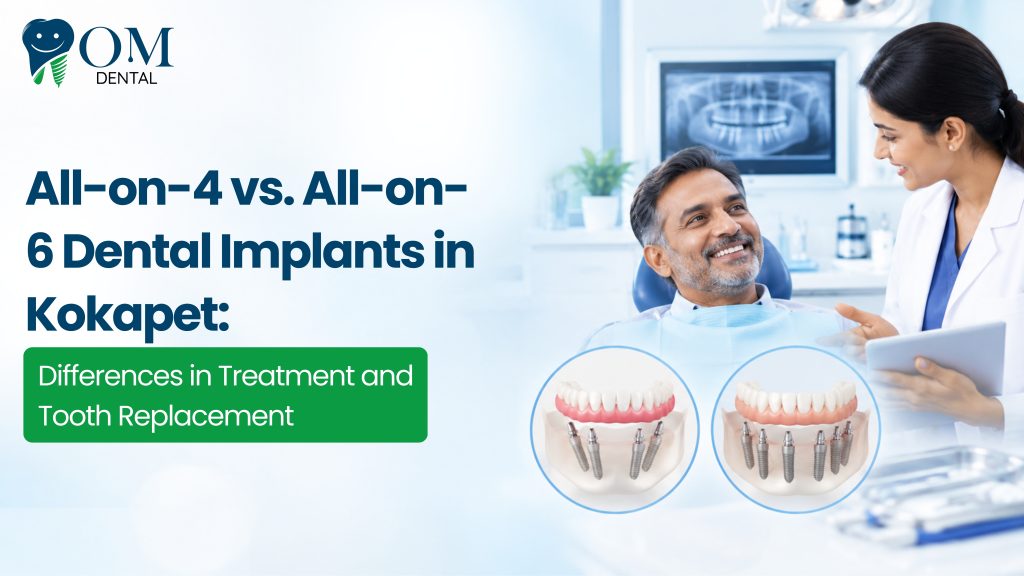
All-on-4 vs. All-on-6 Dental Implants in Kokapet: Differences in Treatment and Tooth Replacement

Replacing an entire arch of missing or severely damaged teeth can significantly improve chewing, speech, appearance, and overall oral function. For patients who need full-arch tooth replacement, implant-supported solutions such as All-on-4 and All-on-6 dental implants can provide an alternative to conventional removable dentures. Both treatments use dental implants to support a fixed full-arch restoration, but the number and positioning of implants are different. All-on-4 dental implants in Kokapet generally use four implants to support a complete arch, while All-on-6 treatment uses six implants. Choosing between these options depends on several factors, including bone availability, oral health, bite forces, treatment goals, and the dentist’s assessment. There is no single solution that is suitable for every patient, so a comprehensive examination is important before treatment planning. All-on-4 and All-on-6 Dental Implants: The Basic Difference The main difference between the two treatment approaches is the number of implants used to support the replacement teeth. All-on-4 uses four strategically positioned implants to support a full arch of replacement teeth. This approach may be considered when the available bone and overall clinical conditions allow the restoration to be supported effectively with four implants. All-on-6 uses six implants across the arch. The additional implants can provide more implant support and may be considered when the patient’s anatomy and treatment plan make additional implant placement beneficial. The final decision should be based on an individual examination rather than simply choosing the option with more implants. How All-on-4 Dental Implants Work? All-on-4 treatment is designed to replace an entire arch using four dental implants. The implants are strategically positioned to provide support for a fixed prosthetic arch. This can be particularly useful for patients who have lost most or all teeth in one arch or whose remaining teeth are not suitable for long-term restoration. The treatment generally involves: The exact sequence and timeline vary from patient to patient. How All-on-6 Dental Implants Work? All-on-6 treatment uses six implants to support a complete dental arch. The additional implants can distribute the support for the restoration across more implant positions. For some patients, this approach may be considered when sufficient bone is available and additional implant support is clinically appropriate. As with All-on-4, treatment planning involves assessing the jawbone, gums, bite, remaining teeth, medical and dental history, and the design of the final restoration. All-on-4 vs. All-on-6: Key Differences: Feature All-on-4 All-on-6 Number of implants 4 implants per arch 6 implants per arch Full-arch replacement Yes Yes Implant support Four strategically positioned implants Six implants distributed across the arch Treatment planning Based on bone, anatomy and restoration requirements Based on bone, anatomy and need for additional support Suitable for Selected full-arch cases Selected full-arch cases where six implants are appropriate Final restoration Fixed full-arch prosthesis Fixed full-arch prosthesis Decision factor Individual clinical assessment Individual clinical assessment The table provides a general comparison. Your dentist will determine which approach is appropriate after evaluating your individual condition. Which Option Provides More Support? Because All-on-6 uses two additional implants, it can provide more implant support points than All-on-4. However, that does not automatically mean All-on-6 is the better choice for every patient. The number of implants is only one part of full-arch treatment planning. Bone quality, implant position, bite forces, gum health, prosthetic design, and overall oral condition also influence the treatment. A dentist may recommend four implants when they provide adequate support for the planned restoration, while another patient may benefit from six implants if additional support is appropriate. Bone Health and Implant Treatment Planning: Adequate bone support is an important consideration when planning dental implants. The dentist may use dental imaging to assess the jawbone and determine suitable implant positions. Current dental guidance emphasises that imaging should be selected according to the individual clinical situation after examination. Patients with significant bone loss may require additional procedures or alternative treatment planning. Bone grafting or other approaches may sometimes be considered depending on the location and amount of available bone. Therefore, patients should not select All-on-4 or All-on-6 solely based on the number of implants. Treatment Process for Full-Arch Dental Implants: Although treatment varies between patients, full-arch implant treatment generally involves several stages. Initial Consultation The dentist evaluates your teeth, gums, bite, jawbone, and overall oral health. Any existing dental infection or gum disease may need to be addressed before implant placement. Digital Planning and Imaging Dental imaging and scans can help the dental team evaluate bone anatomy and plan implant positions and the final restoration. Implant Placement The selected number of implants is placed according to the treatment plan. The procedure is carefully planned around the available bone and important anatomical structures. Healing and Implant Integration After placement, the implants need time to integrate with the surrounding bone. The healing period varies depending on individual factors and the treatment approach. Final Teeth Placement Once the implants are ready to support the final restoration, the permanent full-arch prosthesis is fitted and adjusted for comfort, function, and appearance. Benefits of Full-Arch Implant Treatment: Both All-on-4 and All-on-6 can offer several potential benefits for appropriately selected patients. Fixed Tooth Replacement Unlike traditional removable dentures, implant-supported full-arch teeth are designed to remain secured in position. Improved Chewing Function A stable implant-supported restoration can help patients regain better chewing function compared with an unstable removable denture. Improved Smile Appearance Modern full-arch restorations can be designed to provide a natural-looking appearance while complementing the patient’s facial features. Better Stability Implants anchor the restoration to the jaw, helping reduce the movement that some patients experience with removable dentures. Full-Arch Rehabilitation For patients with extensive tooth loss or severely damaged teeth, full-arch implant treatment can provide a comprehensive approach to tooth replacement. Are All-on-4 and All-on-6 Better Than Dentures? All-on-4 and All-on-6 are different from conventional removable dentures because the replacement teeth are supported by dental implants. However, implant treatment is not automatically the right option for everyone. Dentures, bridges, individual implants, and other restorative options may also be appropriate depending on the patient’s diagnosis and preferences. The

All-on-4 vs. All-on-6 Dental Implants in Kokapet: Differences in Treatment and Tooth Replacement Read More »

Bleeding Gums While Brushing in Kokapet

Bleeding Gums While Brushing in Kokapet: When Is Professional Gum Treatment Necessary?

Noticing blood while brushing your teeth can be worrying, especially when it happens regularly. While occasional bleeding may sometimes be related to brushing technique or minor gum irritation, frequent bleeding can be a sign of gum inflammation or an underlying periodontal problem. For people experiencing persistent bleeding gums, professional evaluation can help identify whether the problem can be managed with improved oral hygiene and cleaning or whether more advanced gum treatment in Kokapet may be required. Healthy gums generally should not bleed during routine brushing or flossing. If you regularly notice blood around your gums, it is important to understand the possible cause and seek professional dental advice when necessary. Why Do Gums Bleed While Brushing? Bleeding gums can occur for several reasons. One of the most common causes is plaque buildup around the teeth and gumline. Plaque contains bacteria that can irritate the gums and cause inflammation. Other possible causes include: If bleeding occurs repeatedly, it is better not to ignore it. A dentist can examine your gums and determine the actual cause. When Should Bleeding Gums Be Taken Seriously? Occasional mild bleeding may not always indicate a serious problem. However, frequent bleeding, especially when accompanied by other symptoms, deserves professional attention. You should consider visiting a dentist if you notice: These symptoms may indicate that gum inflammation has progressed beyond simple irritation. Common Gum Problems That Can Cause Bleeding: Gingivitis Gingivitis is an early stage of gum inflammation that commonly develops because of plaque buildup. The gums may become red, swollen, and more likely to bleed while brushing or flossing. At this stage, professional cleaning and improved daily oral hygiene can often help control the condition. Periodontitis If gum inflammation is not treated, it can progress into periodontal disease. Periodontitis can affect the tissues and bone supporting the teeth. Patients may experience deeper gum pockets, persistent bleeding, gum recession, bad breath, and eventually loose teeth. More advanced conditions may require comprehensive periodontal treatment rather than simple cleaning. Tartar Buildup Plaque that remains on the teeth can harden into tartar. Unlike soft plaque, tartar cannot be completely removed through normal brushing. Professional dental cleaning may be necessary to remove these deposits and help reduce gum irritation. How Professional Gum Treatment Can Help? Professional gum treatment begins with identifying the underlying reason for bleeding. Your dentist may examine your teeth and gums and assess areas where plaque, tartar, inflammation, or periodontal pockets are present. Depending on the condition, treatment may include professional scaling and polishing, deep cleaning, periodontal therapy, or other procedures. For patients searching for gum treatment in Kokapet, the most suitable treatment should be selected after a dental examination rather than based only on the presence of bleeding. The Role of Scaling and Polishing: Professional Scaling and Polishing can be an important part of maintaining healthy gums. Scaling helps remove plaque and hardened tartar from the teeth and areas around the gumline. Polishing helps clean the tooth surfaces and remove certain surface stains. For patients with mild gum inflammation, professional cleaning combined with proper home care may significantly improve gum health. However, patients with deeper periodontal infection may require additional treatment. When Is Deep Gum Treatment Necessary? If infection has progressed below the gumline or periodontal pockets have developed, routine cleaning may not be enough. A dentist may recommend deeper periodontal treatment when there is: The treatment plan depends on the severity of the condition and the overall health of the teeth and gums. Can Laser Gum Treatment Help With Bleeding? Modern dental technology provides additional treatment options for selected gum conditions. Laser gum treatment in Kokapet may be considered in certain cases involving infected or inflamed gum tissue. Dental lasers can be used to target affected areas and reduce bacterial contamination as part of periodontal treatment. Laser treatment is not necessary for every patient with bleeding gums. Mild gingivitis, for example, may respond well to professional cleaning and improved oral hygiene. A dentist can determine whether laser-assisted treatment is appropriate after evaluating the gums and periodontal condition. What Happens During a Professional Gum Examination? A dental gum examination generally begins with a visual assessment of the gums and teeth. The dentist looks for redness, swelling, bleeding, gum recession, tartar, and other signs of periodontal problems. The dentist may also assess the depth of spaces around the gums to understand whether periodontal pockets are present. Depending on the symptoms and clinical findings, dental X-rays may sometimes be recommended to evaluate the supporting bone. Once the condition has been assessed, the dentist can explain the available treatment options and recommend an appropriate plan. How to Prevent Bleeding Gums at Home? Professional treatment is important when gum disease is present, but daily oral care also plays a major role in maintaining healthy gums. Brush Twice a Day Use a soft-bristled toothbrush and brush gently for approximately two minutes. Avoid aggressive brushing, which can irritate the gum tissue. Clean Between Your Teeth Plaque can remain between teeth even after brushing. Floss or use an appropriate interdental cleaning aid to clean these areas. Maintain Regular Dental Visits Routine dental examinations can help identify gum problems before they become advanced. Avoid Tobacco Smoking and tobacco use can negatively affect gum health and may increase the risk of periodontal disease. Limit Frequent Sugary Foods Reducing frequent sugary snacks and maintaining a balanced diet can support better oral health. Why Early Gum Treatment Matters? Ignoring bleeding gums may allow an underlying gum problem to progress. Early-stage gum inflammation can often be easier to manage than advanced periodontal disease. As gum disease progresses, it may affect the tissues and bone that support the teeth. In severe cases, this can contribute to tooth mobility and tooth loss. Seeking professional advice when bleeding becomes frequent can help identify the problem early and prevent unnecessary complications. When Should You Visit a Dentist in Kokapet? If your gums bleed occasionally and the problem improves after correcting your brushing technique, you may simply need to monitor your oral hygiene. However,

Bleeding Gums While Brushing in Kokapet: When Is Professional Gum Treatment Necessary? Read More »

Dental Crown Replacement in Kokapet

Dental Crown Replacement in Kokapet: What to Do When Your Old Crown Becomes Loose or Damaged

A dental crown is designed to protect a weakened tooth, restore its shape, and help you chew comfortably. However, crowns can become loose, cracked, worn, or damaged over time. If your old crown no longer fits properly or causes discomfort while eating, it may be time to visit a dentist for an examination. If you are looking for Dental Crown Replacement in Kokapet, understanding the warning signs and available treatment options can help you take the right next step. A loose or damaged crown should not be ignored because the natural tooth underneath may become exposed to food particles, bacteria, and further damage. At OM Dental Clinic in Kokapet, Hyderabad, patients can receive an assessment of their existing crown and learn whether it can be repaired, recemented, or needs replacement. Signs That Your Dental Crown May Need Replacement Dental crowns can last for many years, but their condition depends on the material used, oral hygiene, chewing habits, and regular dental care. The following signs may indicate that your crown needs professional attention. 1. The Crown Feels Loose A crown that moves while chewing or feels different when you bite may have lost its proper fit or cement seal. Even if it has not fallen out completely, a loose crown should be examined by a dentist. Avoid repeatedly touching or moving it with your tongue or fingers, as this may cause further loosening. 2. Cracks or Visible Damage A chipped or cracked crown may affect your ability to chew comfortably. Damage can occur because of biting hard objects, teeth grinding, accidental injury, or normal wear. Small defects are not always easy to identify at home. A dentist can examine the crown and determine whether repair or replacement is appropriate. 3. Pain or Sensitivity Around the Crown Sensitivity to hot, cold, or sweet foods may indicate an issue with the crowned tooth or surrounding gum tissue. Possible causes include decay near the crown margin, exposed tooth structure, gum recession, or a problem with the tooth’s nerve. Persistent pain should be evaluated rather than treated only with temporary remedies. 4. Food Frequently Gets Trapped Around the Crown If food repeatedly becomes trapped around a crown, the fit, contact with neighbouring teeth, or surrounding gum condition may need attention. Poorly fitting margins can also allow bacteria to collect around the underlying tooth. A dental examination can help identify the cause and determine the appropriate treatment. 5. The Crown Looks Worn or Has Changed Appearance Older crowns may develop visible wear, chips, or changes in their appearance. Gum recession can also expose the edge of a crown, making it more noticeable. If the crown affects your smile or no longer functions properly, discuss suitable replacement options with your dentist. What Should You Do If Your Dental Crown Becomes Loose? Taking the right precautions can help protect your tooth until you receive professional care. Avoid chewing on the affected side. Hard, sticky, or chewy foods can place additional pressure on a loose crown. Keep the area clean. Brush gently and maintain your usual oral hygiene routine without forcing the crown to move. Do not use household glue. Products such as superglue are not intended for dental use and may cause harm or complicate treatment. Do not force the crown back into place. An incorrectly positioned crown may damage the tooth or surrounding tissues. Contact your dentist promptly. If the crown comes off completely, keep it in a clean container and take it to your appointment if possible. Do not attempt to wear it if it is cracked, distorted, or does not fit comfortably. If you experience severe pain, facial swelling, fever, or difficulty swallowing or breathing, seek urgent medical or dental care. Difficulty breathing or swallowing requires emergency attention. How Dentists Determine Whether a Crown Needs Replacement Not every loose or damaged crown needs to be replaced immediately. The dentist first examines the crown and the natural tooth beneath it. Checking the Crown and Its Fit The dentist assesses whether the crown is cracked, worn, loose, or poorly fitted. The surrounding gum tissue and the contact between the crown and neighbouring teeth may also be checked. Examining the Underlying Tooth A crown can hide decay or damage underneath it. Depending on your symptoms and examination findings, the dentist may recommend dental X-rays to assess the tooth and surrounding structures. If the tooth is healthy and the crown remains in good condition, recementing may sometimes be possible. If the crown is damaged or the underlying tooth has changed, a replacement or additional treatment may be required. Planning the Appropriate Treatment Treatment depends on the reason the crown has failed. Options may include recementing an intact crown, replacing a damaged crown, treating tooth decay, or performing root canal treatment if the tooth’s inner tissue is affected. For more information about restorative options, you can explore crowns and bridges treatment in Kokapet at OM Dental. What Happens During Dental Crown Replacement? The process varies according to the condition of the existing crown and the tooth underneath it. A typical replacement procedure may involve the following steps. 1. Dental Examination The dentist reviews your symptoms, examines the existing crown, and checks the underlying tooth and surrounding gums. Imaging may be recommended when necessary. 2. Removal of the Old Crown If replacement is required, the old crown is carefully removed. The dentist then examines the remaining tooth structure for decay, cracks, or other problems. 3. Preparing the Tooth Any necessary treatment is completed before the new crown is planned. The tooth may need reshaping to create an appropriate surface for the restoration. If the underlying tooth has extensive damage, additional treatment may be necessary before a new crown can be fitted. 4. Taking an Impression or Digital Scan An impression or digital scan records the shape of the prepared tooth and surrounding teeth. This information helps the dental team create a crown that fits properly and matches the bite. 5. Temporary Protection and Final Crown Placement A temporary crown may

Dental Crown Replacement in Kokapet: What to Do When Your Old Crown Becomes Loose or Damaged Read More »

Single Tooth Implant vs. Dental Bridge in Kokapet

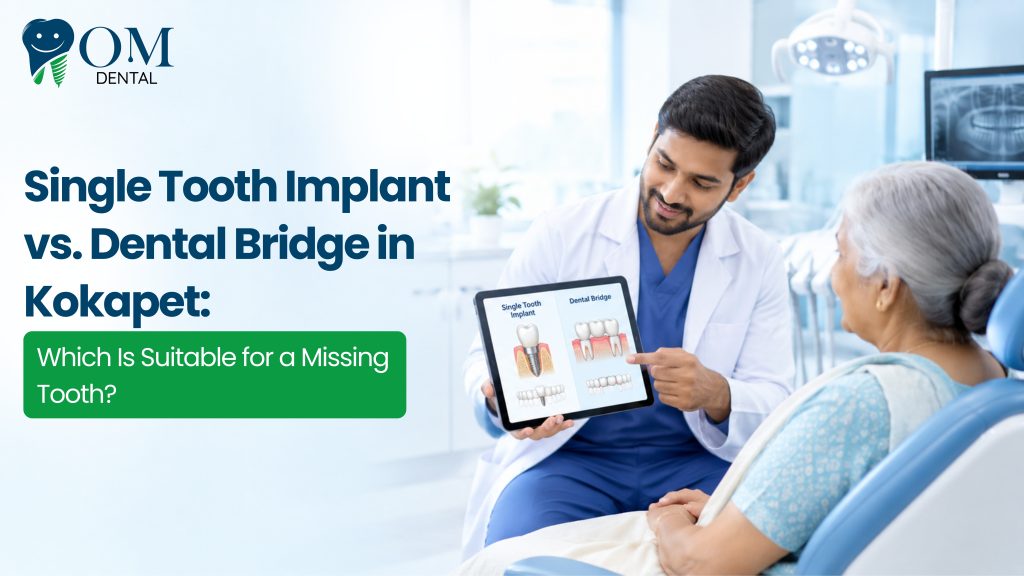
Single Tooth Implant vs. Dental Bridge in Kokapet: Which Is Suitable for a Missing Tooth?

Losing a single tooth can affect your smile, chewing ability, and overall oral comfort. When a tooth is missing, leaving the gap untreated may also allow nearby teeth to shift over time. Fortunately, there are several tooth replacement options available today. Two commonly considered choices are a single tooth implant and a dental bridge. If you are looking for a tooth implant in Kokapet, understanding how implants and bridges differ can help you discuss the right option with your dentist. Both treatments can restore a missing tooth, but they work in different ways and have different requirements. OM Dental in Kokapet, Hyderabad, provides dental implant and restorative dental treatments based on individual oral health needs. The clinic also offers crowns and bridges as part of its restorative dental care. Choosing Between an Implant and a Bridge A single tooth implant is designed to replace both the missing tooth and its root. A small implant is placed into the jawbone and later supports a dental crown. This allows the replacement tooth to function independently without relying on the neighbouring teeth for support. A dental bridge, on the other hand, replaces the visible portion of the missing tooth while using the adjacent teeth as support. A traditional bridge usually consists of a replacement tooth connected to crowns placed over the neighbouring teeth. Both options can provide a fixed replacement for a missing tooth. However, the choice depends on factors such as the condition of the surrounding teeth, available jawbone, gum health, treatment timeline, and long-term oral health goals. How a Single Tooth Implant Restores a Missing Tooth? A single tooth implant involves several stages. First, the dentist examines the missing-tooth area and evaluates the gums and jawbone. Dental X-rays or other imaging may be used to determine whether there is sufficient bone for implant placement. Once the area is suitable, the implant is placed into the jawbone. The implant gradually integrates with the surrounding bone during the healing period. After the healing process, an abutment and custom dental crown are placed to complete the restoration. One important benefit of this approach is that the implant acts as an artificial tooth root. It provides support for the crown and can help maintain the bone in the area of the missing tooth. Patients considering a single tooth implant in Kokapet can discuss their bone condition, implant suitability, expected treatment timeline, and restoration options during a dental consultation. How a Dental Bridge Fills the Tooth Gap? A dental bridge is another fixed solution for replacing a missing tooth. In a conventional bridge, the teeth on either side of the gap are prepared to support dental crowns. The replacement tooth is connected between these crowns, creating a bridge across the missing-tooth space. One advantage of a dental bridge is that it does not require implant placement into the jawbone. This can make the treatment process different from implant treatment. A dental bridge in Kokapet may be considered when the neighbouring teeth are healthy enough to provide support and when a patient prefers a fixed restoration without undergoing implant placement. However, the supporting teeth need to be carefully evaluated before treatment. If the adjacent teeth have significant decay, gum disease, mobility, or other problems, a bridge may not always be the preferred option. Important Differences Between the Two Treatments Although both treatments can replace one missing tooth, there are several differences to consider. Effect on Neighbouring Teeth A single tooth implant is independently supported by the jawbone. Healthy neighbouring teeth generally do not need to be reduced to support the implant crown. With a conventional dental bridge, the neighbouring teeth are usually prepared so that crowns can be placed over them. For patients with healthy adjacent teeth, preserving their natural tooth structure may be an important consideration. Support for the Jawbone A missing tooth no longer provides natural root stimulation to the jawbone. Over time, this can contribute to bone loss in the area. Because an implant is placed into the jawbone, it can provide root-like support and may help maintain the bone around the missing tooth. A traditional bridge replaces the visible tooth but does not replace the missing root. Treatment Duration The treatment timeline is another difference. A dental bridge can generally be planned and completed without waiting for an implant to integrate with the jawbone. The exact time depends on the condition of the supporting teeth and the restoration required. Dental implant treatment usually takes longer because the implant needs time to heal and integrate with the jawbone before the final crown is placed. Appearance and Function Both implants and bridges can be designed to match the surrounding teeth. A well-made restoration can improve the appearance of the smile and help restore chewing function. A dental implant-supported crown is independently positioned in the missing-tooth area, while a bridge connects the replacement tooth to the supporting teeth. When an Implant May Be the Preferred Option? A single tooth implant may be considered when a patient wants an independent tooth replacement and has suitable bone and gum health. An implant may be particularly appealing when: However, an implant is not automatically suitable for everyone. Bone condition, gum health, oral hygiene, bite, and other clinical factors should be assessed before treatment. Situations Where a Dental Bridge May Be Considered A dental bridge may be an appropriate option for patients who have suitable supporting teeth and want a fixed replacement without implant surgery. A bridge may be considered when: The dentist will evaluate the condition of the teeth around the missing space before recommending a bridge. Benefits of Choosing a Single Tooth Implant When clinically suitable, a single tooth implant offers several potential advantages. Independent Tooth Replacement The implant does not normally depend on the adjacent natural teeth for support. Natural-Looking Restoration A custom-made crown can be designed to match the colour, shape, and size of the surrounding teeth. Jawbone Support The implant is positioned in the jawbone and provides support similar to a natural tooth root.

Single Tooth Implant vs. Dental Bridge in Kokapet: Which Is Suitable for a Missing Tooth? Read More »

Single Sitting Root Canal Treatment in Kokapet

Single Sitting Root Canal Treatment in Kokapet – Quick Relief from Tooth Pain

Are you experiencing severe tooth pain, sensitivity, or discomfort while eating and looking for a treatment that can restore your tooth without multiple dental visits? If you are searching for Single Sitting Root Canal Treatment in Kokapet, OM Dental Clinic provides modern root canal treatment designed to treat infected or damaged teeth while helping patients get back to their normal routine sooner. OM Dental Clinic in Kokapet, Hyderabad, offers comprehensive dental care with modern technology and a patient-focused approach. With 10+ years of experience, the clinic provides treatments for tooth pain, infection, damaged teeth, and other dental concerns. A single-sitting root canal may be suitable for selected cases after a proper dental examination. Single Sitting Root Canal: What to Expect A root canal treatment is a dental procedure used to treat a tooth when the inner pulp becomes infected, inflamed, or damaged. The pulp contains nerves and blood vessels. When bacteria reach this area because of deep decay, cracks, trauma, or other dental problems, it can result in pain and infection. In a traditional root canal, treatment may sometimes require multiple appointments depending on the condition of the tooth. A single sitting root canal treatment aims to complete the necessary cleaning, shaping, and sealing of the affected tooth during one appointment when the case is suitable. However, not every tooth can or should be treated in one sitting. The dentist evaluates the tooth, infection, surrounding tissues, and other factors before deciding whether single-visit treatment is appropriate. Why Might You Need a Root Canal? A root canal may be recommended when the dental pulp is significantly inflamed or infected. Common causes include: Ignoring an infected tooth may allow the problem to progress and can sometimes lead to swelling, an abscess, or damage to surrounding tissues. If you are experiencing persistent tooth pain, it is better to have the tooth examined by a dentist rather than relying only on temporary pain relief. Common Symptoms That May Indicate a Root Canal Different dental problems can cause similar symptoms, so only a dental examination can determine the exact cause. Some common signs associated with an infected or damaged tooth include: Severe Toothache Persistent or intense tooth pain can be a sign that the tooth’s inner pulp is affected. The pain may become more noticeable while chewing or biting. Sensitivity to Hot and Cold If your tooth remains sensitive after exposure to hot or cold foods and drinks, it may indicate an underlying dental problem. Pain While Chewing Pain when biting down can sometimes occur when the tissues around an affected tooth become inflamed. Swelling Around the Tooth Swelling near a tooth may indicate infection and should be evaluated by a dentist. Darkening or Discoloration A tooth that becomes darker than surrounding teeth may sometimes have experienced internal damage. Recurring Dental Pain If tooth pain repeatedly returns even after temporary relief, the underlying cause should be investigated. How Does Single Sitting Root Canal Treatment Work? The exact procedure depends on the tooth and its condition, but a root canal generally involves several important stages. 1. Dental Examination The dentist first examines the affected tooth and may use dental X-rays or other diagnostic methods to understand the condition of the tooth and surrounding area. This helps determine whether root canal treatment is required and whether the tooth may be suitable for single-sitting treatment. 2. Local Anesthesia Local anesthesia is administered to numb the affected area. This helps make the procedure more comfortable for the patient. 3. Accessing the Tooth The dentist creates a small opening in the tooth to access the infected or damaged pulp chamber and root canals. 4. Cleaning the Root Canals The infected or damaged pulp tissue is carefully removed. The root canals are then cleaned and shaped to prepare them for filling. 5. Disinfection The canals are cleaned and disinfected to reduce bacterial contamination and prepare the tooth for sealing. 6. Filling and Sealing Once the canals have been properly cleaned and prepared, they are filled with a suitable material and sealed to help prevent bacteria from entering again. 7. Restoration of the Tooth Depending on the amount of tooth structure remaining, the dentist may recommend a filling, crown, or another suitable restoration to protect the treated tooth. Is Single Sitting Root Canal Treatment Safe? Root canal treatment is a commonly performed dental procedure used to save teeth that might otherwise require extraction. Whether a single-sitting procedure is suitable depends on factors such as the extent of infection, tooth anatomy, presence of swelling or abscess, and the overall condition of the tooth. A dentist should evaluate the tooth before recommending single-visit treatment. In some cases, multiple appointments may be more appropriate. The goal is not simply to complete treatment quickly but to properly clean, disinfect, seal, and restore the affected tooth. Is Root Canal Treatment Painful? Many patients are concerned about pain during root canal treatment. Local anesthesia is used to numb the area, which helps make the procedure more comfortable. Some patients may experience mild soreness or sensitivity after treatment. This can vary depending on the condition of the tooth and surrounding tissues. If you experience significant or persistent pain after treatment, contact your dentist for an evaluation. Advantages of Single Sitting Root Canal Treatment When a patient is a suitable candidate, completing root canal treatment in one sitting can offer practical benefits. Fewer Dental Visits One of the main advantages is that the required root canal procedure may be completed during a single appointment. Faster Treatment Completion Patients may be able to complete the main root canal procedure sooner compared with treatment plans requiring several appointments. Convenient for Busy Patients Single-visit treatment can be convenient for people with busy work schedules or limited availability for repeated dental appointments. Helps Address Tooth Infection The treatment focuses on removing infected or damaged pulp tissue and cleaning the root canals. Helps Preserve the Natural Tooth Root canal treatment is designed to save the affected natural tooth when possible rather than removing it.

Single Sitting Root Canal Treatment in Kokapet – Quick Relief from Tooth Pain Read More »

Wisdom Tooth Removal in Kokapet

Wisdom Tooth Removal in Kokapet – Procedure, Symptoms & Recovery Guide

Wisdom teeth are the third and final set of molars that usually appear at the back of the mouth. They commonly erupt between the ages of 17 and 25. While some wisdom teeth grow normally without causing problems, others may become impacted, partially erupt, or cause pain and infection. If you are experiencing pain, swelling, or discomfort at the back of your mouth, you may need to consult a dentist for wisdom tooth removal in Kokapet. At OM Dental, patients receive personalised and comfortable dental care based on the position and condition of the wisdom tooth. Understanding the symptoms, removal procedure, and recovery process can help you feel more prepared before treatment. Wisdom Teeth: What You Should Know Wisdom teeth are the last molars located at the back of the upper and lower jaws. Most people can have up to four wisdom teeth. Sometimes, there may not be enough space in the jaw for these teeth to erupt properly. As a result, a wisdom tooth may: When a wisdom tooth causes ongoing problems, your dentist may recommend removal. Why Do Wisdom Teeth Need to Be Removed? Not every wisdom tooth needs to be removed. However, removal may be recommended when the tooth causes pain, infection, or other dental problems. Common reasons for wisdom tooth removal include: At OM Dental, the wisdom tooth and surrounding area can be examined to determine whether removal is the appropriate treatment option. Common Symptoms of Wisdom Tooth Problems Wisdom tooth problems can cause different symptoms depending on the position of the tooth and whether it has erupted properly. Pain at the Back of the Mouth Pain around the last molar is one of the most common symptoms. The discomfort may be mild at first and gradually become more severe. Swollen or Red Gums The gums around a partially erupted wisdom tooth may become swollen, red, or tender. Jaw Pain and Swelling Some patients may experience pain or swelling in the jaw area. Bad Breath or Bad Taste Food particles and bacteria can become trapped around a partially erupted wisdom tooth, leading to bad breath or an unpleasant taste. Difficulty Opening the Mouth Inflammation or infection around the wisdom tooth can sometimes cause jaw stiffness and discomfort while opening the mouth. Pain While Chewing Pressure from an impacted or infected wisdom tooth may cause discomfort while chewing. If you experience persistent pain or swelling, it is important to seek professional dental advice instead of ignoring the symptoms. What Is an Impacted Wisdom Tooth? An impacted wisdom tooth is a tooth that does not have enough space to erupt properly. It may: The position and angle of the tooth can affect the type of procedure required for removal. A dental examination and imaging may help the dentist understand the position of the wisdom tooth before planning treatment. Wisdom Tooth Removal Procedure The procedure for wisdom tooth removal in Kokapet depends on the position, angle, and condition of the tooth. Here is what you can generally expect during the treatment. Step 1: Dental Examination The dentist examines the wisdom tooth and surrounding area. Imaging may be recommended to understand the position of the tooth and nearby structures. This helps in planning the appropriate treatment. Step 2: Anaesthesia Local anaesthesia is commonly used to numb the treatment area. This helps make the procedure more comfortable. For highly anxious patients or more complex cases, the dentist may discuss additional options depending on individual requirements. Step 3: Accessing the Wisdom Tooth If the tooth is impacted or located beneath the gums, the dentist may need to carefully access the tooth. In some cases, a small incision may be required. Step 4: Removing the Tooth The dentist carefully removes the wisdom tooth using appropriate dental instruments. Depending on the position of the tooth, the procedure may be straightforward or may require a surgical approach. Step 5: Stitches if Required Some cases may require stitches after the tooth is removed. Your dentist will provide instructions on how to care for the area after the procedure. At OM Dental, the approach focuses on providing a comfortable experience during Wisdom Tooth Removal based on each patient’s individual dental condition. How Long Does Wisdom Tooth Removal Take? The duration of the procedure depends on several factors, including: A straightforward extraction may take less time, while an impacted wisdom tooth may require a longer procedure. Your dentist can provide a better estimate after examining your dental condition. Does Wisdom Tooth Removal Hurt? During the procedure, anaesthesia is used to numb the treatment area. You may feel pressure during the procedure but should not experience sharp pain. After the anaesthesia wears off, some discomfort, swelling, or tenderness may occur. Your dentist may provide instructions regarding pain management and post-treatment care. Wisdom Tooth Recovery Guide Recovery after wisdom tooth removal varies from person to person. Following your dentist’s instructions is important for proper healing. Rest After the Procedure Take adequate rest after the procedure and avoid strenuous activities for the period recommended by your dentist. Control Swelling Mild swelling can occur after wisdom tooth removal. Follow your dentist’s advice regarding cold compresses and other methods to manage swelling. Eat Soft Foods Choose soft foods during the initial recovery period. Some options may include: Avoid foods that may irritate or become stuck in the extraction area. Maintain Oral Hygiene Keep your mouth clean according to your dentist’s instructions. Avoid disturbing the extraction area while brushing and follow the recommended oral hygiene routine. Take Prescribed Medicines Take any prescribed medication exactly as directed by your dentist. Do not self-medicate or stop medication without professional advice. What Should You Avoid After Wisdom Tooth Removal? After the procedure, your dentist may advise you to avoid certain activities that can interfere with healing. Depending on your individual instructions, you may need to avoid: Always follow the specific post-operative instructions provided by your dentist. When Should You Contact Your Dentist After Wisdom Tooth Removal? Some discomfort and swelling can be part of the normal

Wisdom Tooth Removal in Kokapet – Procedure, Symptoms & Recovery Guide Read More »

Professional Teeth Cleaning in Kokapet

Professional Teeth Cleaning in Kokapet – Maintain Healthy Teeth & Gums at OM Dental

A clean and healthy smile is an important part of good oral health. While regular brushing and flossing help remove daily plaque and food particles, they may not completely remove hardened tartar and stubborn stains from your teeth. If you are looking for Professional Teeth Cleaning in Kokapet, OM Dental Clinic provides professional scaling and polishing to help remove plaque, tartar, and surface stains while supporting healthier teeth and gums. OM Dental Clinic offers professional dental cleaning in Kokapet, Hyderabad, using modern dental equipment and personalized treatment approaches. Regular professional cleaning can help maintain oral hygiene, support healthy gums, and keep your smile looking cleaner and fresher. Professional Teeth Cleaning – Scaling & Polishing for a Healthier Smile Professional teeth cleaning is a preventive dental treatment commonly known as scaling and polishing. It is performed by dental professionals to remove plaque, tartar, and certain surface stains that cannot always be removed effectively through regular brushing. Plaque is a sticky layer that naturally forms on the teeth. When it is not properly removed, it can harden into tartar. Tartar can accumulate around the gumline and between teeth, making it difficult to clean with a regular toothbrush. During professional cleaning, scaling helps remove hardened deposits from the teeth, while polishing helps remove certain surface stains and leaves the tooth surfaces smoother. At OM Dental, professional scaling and polishing uses ultrasonic technology to help clean the teeth effectively and comfortably. Why Is Professional Teeth Cleaning Important? Daily brushing and flossing are essential for maintaining oral hygiene, but professional dental cleaning provides additional support by removing deposits that may remain even with regular home care. Regular professional teeth cleaning may help: Professional cleaning is particularly useful for areas around the gumline and between teeth where plaque and tartar can accumulate. Signs You May Need Professional Teeth Cleaning Knowing when to schedule a professional cleaning can help you maintain better oral hygiene. Some common signs that may indicate the need for a dental cleaning include: Tartar Buildup If you notice yellowish or brownish deposits around your teeth, especially near the gumline, they may be hardened tartar. Regular brushing generally cannot remove hardened tartar, so professional cleaning may be required. Bleeding Gums Gums that bleed during brushing or flossing can be associated with plaque buildup and gum inflammation. A dental examination can help determine the cause and whether professional cleaning or additional treatment is required. Bad Breath Persistent bad breath may sometimes be associated with plaque, tartar, or bacterial buildup in the mouth. Professional cleaning can help improve oral hygiene when these factors are contributing to the problem. Stained Teeth Tea, coffee, tobacco, and certain foods can contribute to surface staining. Professional scaling and polishing can help remove some external stains and make teeth appear cleaner. If you are specifically looking for a brighter smile, you can also explore Professional Teeth Whitening Treatment in Kokapet at OM Dental. It Has Been Several Months Since Your Last Cleaning Even people who maintain good daily oral hygiene can develop tartar over time. Depending on your oral health and tartar buildup, your dentist may recommend periodic professional cleaning. What Happens During Professional Teeth Cleaning at OM Dental? Professional teeth cleaning is generally a straightforward dental procedure. The exact process can vary depending on the condition of your teeth and gums. Step 1: Dental Examination Before cleaning, the dentist examines your teeth and gums. This helps identify tartar buildup, plaque, stains, gum inflammation, or other dental concerns. Step 2: Scaling Scaling is performed to remove plaque and hardened tartar from the tooth surfaces. OM Dental uses ultrasonic technology for professional scaling. The ultrasonic equipment helps break down deposits while allowing the dental professional to clean areas that may be difficult to reach through regular brushing. Step 3: Polishing After scaling, the teeth are polished. Polishing helps remove certain surface stains and makes the tooth surfaces smoother. Step 4: Oral Hygiene Guidance After the procedure, your dentist may provide personalized advice regarding brushing, flossing, and other oral hygiene practices based on your dental condition. Is Professional Teeth Cleaning Painful? Many people avoid dental cleaning because they are concerned about discomfort. However, professional scaling is generally well tolerated. Some patients may experience mild sensitivity during or after the procedure, particularly if they have significant tartar buildup, sensitive teeth, or gum inflammation. If you experience sensitivity or discomfort during treatment, inform your dentist so that your concerns can be addressed appropriately. At OM Dental, the focus is on comfortable, patient-friendly dental care using modern equipment and individualized treatment approaches. Does Scaling Damage Tooth Enamel? Professional scaling is designed to remove plaque and tartar deposits from the tooth surface. When performed properly by a dental professional, it is not intended to damage healthy tooth enamel. Tartar itself can contribute to oral health problems when allowed to accumulate around the teeth and gums. Professional cleaning helps remove these deposits and supports better oral hygiene. However, the condition of your teeth and gums should always be evaluated by a dentist before deciding on a treatment plan. Does Professional Teeth Cleaning Whiten Teeth? Professional teeth cleaning and teeth whitening are different dental procedures. Scaling and polishing can remove tartar and some external stains caused by tea, coffee, tobacco, and other staining substances. This may make your teeth appear cleaner and brighter. However, professional cleaning does not change the natural color of the teeth in the same way as a dedicated whitening treatment. For patients who want to improve the appearance of tooth discoloration, OM Dental also provides professional teeth whitening in Kokapet. Your dentist can examine your teeth and determine which treatment is appropriate for your specific concern. Professional Teeth Cleaning vs. Regular Brushing Regular brushing and professional cleaning are both important but serve different purposes. Brushing twice a day helps remove soft plaque and food particles from the teeth. Flossing or interdental cleaning can help clean areas between teeth. However, once plaque hardens into tartar, it generally cannot be removed effectively with a toothbrush. Professional

Professional Teeth Cleaning in Kokapet – Maintain Healthy Teeth & Gums at OM Dental Read More »

Zoom Teeth Whitening in Kokapet, Hyderabad

Zoom Teeth Whitening in Kokapet, Hyderabad – Brighten Your Smile with Professional Care

A bright and beautiful smile can make a big difference in your overall appearance and confidence. Over time, however, teeth may become dull or discoloured due to factors such as coffee, tea, certain foods, smoking, ageing, and other lifestyle habits. If you are looking for Zoom Teeth Whitening in Kokapet, Hyderabad, professional dental whitening can help improve the appearance of stained or discoloured teeth. At OM Dental, patients can receive personalised dental care and suitable treatment recommendations based on their individual oral health and whitening needs. Professional teeth whitening is a popular cosmetic dental treatment for people who want a brighter and more confident smile. Professional Teeth Whitening – Brighten Your Smile with Expert Care Professional teeth whitening is a cosmetic dental procedure designed to improve the colour and brightness of teeth. Unlike regular toothpaste or over-the-counter products, professional whitening is performed under dental supervision. Before recommending treatment, a dentist can examine your teeth and gums and determine whether whitening is suitable for you. Teeth whitening may help improve the appearance of: The results can vary depending on the cause and severity of tooth discolouration. Why Do Teeth Become Yellow or Discoloured? Teeth can gradually lose their natural brightness for many reasons. Some common causes include: Tea and Coffee Regular consumption of tea and coffee can cause surface stains over time. Smoking and Tobacco Use Tobacco can lead to noticeable stains and discolouration on teeth. Certain Foods and Drinks Strongly coloured foods and beverages may contribute to staining. Ageing As people age, natural changes in tooth enamel can make teeth appear darker or more yellow. Poor Oral Hygiene Inadequate brushing and cleaning can allow plaque and stains to build up. Certain Dental Conditions Some types of tooth discolouration may be related to internal changes in the tooth and may require a different cosmetic or restorative approach. A dental consultation can help identify the possible cause of discolouration. What Is Zoom Teeth Whitening? Zoom teeth whitening is commonly associated with professional in-office teeth whitening designed to brighten the appearance of natural teeth. The exact whitening technique and treatment plan may depend on the dental clinic, whitening system used, and the patient’s individual dental condition. Before undergoing any whitening treatment, it is important to have a professional dental evaluation to determine: At OM Dental, the treatment approach is focused on understanding each patient’s individual dental needs before recommending suitable cosmetic dental care. Benefits of Professional Teeth Whitening Professional teeth whitening can offer several benefits for suitable patients. Brighter-Looking Teeth Whitening treatment can help reduce the appearance of certain stains and make teeth look brighter. Improved Smile Appearance A brighter smile can improve the overall appearance of your teeth. Personalised Dental Care Professional dental evaluation helps determine whether whitening is suitable for your teeth and oral health. Convenient Cosmetic Treatment Depending on the whitening method and severity of discolouration, treatment may be completed according to a personalised dental plan. Enhanced Confidence Many people feel more confident when they are happy with the appearance of their smile. How Does Professional Teeth Whitening Work? The teeth whitening process generally begins with a dental consultation. Step 1: Dental Examination Your dentist examines your teeth and gums to check your oral health and understand the type of discolouration. Professional whitening may not be suitable in every situation. For example, certain dental restorations or underlying dental problems may need to be addressed separately. Step 2: Understanding Your Smile Goals The dentist discusses your expectations and explains the available treatment options. Step 3: Professional Whitening Treatment The appropriate whitening procedure is performed according to your individual treatment plan. OM Dental offers Teeth Whitening as part of its cosmetic dental services, with in-office whitening options depending on individual dental needs. Step 4: Post-Treatment Guidance After treatment, your dentist may provide guidance on maintaining your results and reducing future staining. Is Professional Teeth Whitening Safe? Professional teeth whitening should be performed under appropriate dental supervision. Before treatment, your dentist can examine your teeth and gums to identify any dental concerns that may need attention. It is important to remember that whitening may not be suitable for everyone. People with certain dental conditions, tooth sensitivity, untreated cavities, or gum problems may need additional dental care before considering cosmetic whitening. A professional consultation helps determine the most suitable approach. Does Teeth Whitening Cause Sensitivity? Some people may experience temporary tooth sensitivity after whitening treatment. The level of sensitivity can vary depending on: If you have sensitive teeth, inform your dentist before treatment. Your dentist can provide appropriate guidance based on your individual needs. How Long Do Teeth Whitening Results Last? The results of teeth whitening can vary from person to person. Several factors can affect how long your teeth remain bright, including: Maintaining good oral hygiene and following your dentist’s recommendations can help preserve the appearance of your smile. How Can You Maintain a Brighter Smile? After professional whitening, good oral care is important. Here are some simple tips: Regular Scaling and Polishing can also help remove plaque, tartar, and certain surface stains, supporting better oral hygiene and a cleaner-looking smile. Teeth Whitening vs Scaling and Polishing Many people believe that scaling and polishing and teeth whitening are the same treatment. However, they serve different purposes. Scaling and Polishing Scaling and polishing primarily focus on oral hygiene. The procedure helps remove plaque, tartar, and surface stains. Professional Teeth Whitening Professional whitening is a cosmetic treatment focused on improving the brightness and colour of natural teeth. Your dentist can recommend the appropriate treatment based on your oral health and smile goals. Who Can Consider Teeth Whitening? Professional teeth whitening may be considered by individuals who are unhappy with the appearance of stained or discoloured natural teeth. You may consider consulting a dentist if you have: A professional dental examination is important before starting any cosmetic treatment. Why Choose OM Dental for Teeth Whitening in Kokapet? Choosing a dental clinic for cosmetic treatment is an important decision. At OM Dental, the focus is on

Zoom Teeth Whitening in Kokapet, Hyderabad – Brighten Your Smile with Professional Care Read More »

Dental Braces Treatment in Kokapet

Dental Braces Treatment in Kokapet – Straighten Crooked Teeth with Expert Orthodontic Care at OM Dental

Do you have crooked, crowded, or uneven teeth and want a healthier-looking, more confident smile? If you are searching for Dental Braces Treatment in Kokapet, OM Dental Clinic provides orthodontic care to help improve the alignment of teeth and support better oral function. Braces can gradually move teeth into more appropriate positions and may also help address problems related to crowding, spacing, and bite alignment. OM Dental Clinic in Kokapet, Hyderabad, offers comprehensive dental care using modern technology and a patient-focused approach. With 10+ years of experience, the clinic provides personalized dental treatments based on each patient’s oral health needs, including orthodontic and cosmetic dental care. What Is Dental Braces Treatment? Dental braces are orthodontic appliances used to gradually move teeth into better positions. They apply controlled pressure to the teeth over time, helping improve their alignment. Braces may be recommended for people with: The type of braces and duration of treatment depend on the patient’s age, dental condition, tooth movement required, and overall treatment goals. Before starting treatment, the dentist or orthodontic professional evaluates the teeth and bite to develop an appropriate treatment plan. Why Do People Need Braces? Straight teeth are not only about appearance. Properly aligned teeth can also make daily oral hygiene easier and may support better chewing and overall oral function. Crooked Teeth Crooked teeth can overlap or rotate, making some areas difficult to clean properly. Braces can gradually improve tooth alignment. Crowded Teeth Crowding occurs when there is insufficient space for teeth to align properly. Orthodontic treatment may help create a more organized tooth arrangement. Gaps Between Teeth Some people have noticeable spaces between their teeth. Braces may help close certain gaps depending on their cause and location. Bite Problems Some patients have alignment problems involving the way the upper and lower teeth meet. Orthodontic treatment may be recommended to improve the bite. Smile Appearance Better tooth alignment can improve the overall appearance of the smile and may increase confidence. Different Types of Dental Braces There are different orthodontic options available today. The appropriate option depends on the patient’s dental condition and treatment requirements. Traditional Metal Braces Traditional metal braces use brackets and wires to gradually move teeth. They are a commonly used orthodontic option and can be suitable for a wide range of alignment problems. Ceramic Braces Ceramic braces work similarly to traditional braces but use tooth-coloured or less noticeable brackets. They may be preferred by patients who want a more discreet appearance. Self-Ligating Braces Self-ligating braces use a specialized bracket system that holds the archwire without conventional elastic ligatures. Depending on the case, they may be considered as an orthodontic treatment option. Clear Aligners Clear aligners are removable transparent trays designed to gradually move teeth. They are different from traditional braces and may be suitable for selected cases. OM Dental also offers Invisalign treatment for patients who may be candidates for clear aligner therapy. How Does Dental Braces Treatment Work? Braces treatment usually takes place over several stages. Step 1: Initial Dental Evaluation The dentist evaluates your teeth, gums, bite, and overall oral health. Dental photographs, X-rays, scans, or other diagnostic records may be recommended depending on the case. Step 2: Treatment Planning After evaluating your teeth, the dental professional develops a personalized treatment plan. This may include selecting the type of braces and determining the approximate treatment duration. Step 3: Placement of Braces If traditional braces are selected, brackets are attached to the teeth and connected with orthodontic wires. Step 4: Regular Adjustments Patients usually need regular follow-up appointments. During these visits, the orthodontic appliances may be adjusted to continue controlled tooth movement. Step 5: Monitoring Progress Your dentist monitors tooth movement and bite alignment throughout the treatment. Step 6: Retention After active orthodontic treatment is completed, a retainer may be recommended. Retainers help maintain the new position of the teeth and reduce the risk of unwanted movement. How Long Does Braces Treatment Take? The duration of braces treatment is different for every patient. Factors that can affect treatment time include: Some cases may require a shorter treatment period, while more complex alignment problems can take longer. Your dentist can provide a more personalized estimate after examining your teeth. Are Dental Braces Painful? Braces treatment is generally associated with pressure or mild discomfort, especially after braces are initially placed or adjusted. You may notice temporary: These symptoms often improve as the mouth adjusts to the braces. If you experience severe or persistent discomfort, you should contact your dental professional. What Foods Should You Avoid With Braces? If you have traditional braces, certain hard or sticky foods can damage brackets or wires. It is generally helpful to be careful with: Cutting harder foods into smaller pieces can make eating easier and reduce unnecessary pressure on orthodontic appliances. Your dentist will provide specific dietary instructions based on your braces and treatment plan. How to Maintain Oral Hygiene During Braces Treatment Maintaining good oral hygiene is especially important while wearing braces because food particles and plaque can collect around brackets and wires. Follow these habits: Good oral hygiene during orthodontic treatment helps keep the teeth and gums healthy. If you need professional cleaning during your orthodontic treatment, OM Dental also provides scaling and polishing to help remove plaque and tartar. What Happens After Braces Are Removed? Getting your braces removed is an important milestone, but orthodontic treatment does not necessarily end there. Your dentist may recommend a retainer to help maintain the corrected tooth positions. Retainers can be removable or fixed depending on your individual treatment requirements. Following your dentist’s instructions about retainer use is important because teeth can naturally shift over time. Benefits of Dental Braces Treatment Dental braces can provide several potential benefits when they are recommended for the patient’s specific orthodontic needs. Improved Tooth Alignment Braces can gradually move teeth into more appropriate positions. Easier Cleaning Better-aligned teeth may make brushing and flossing easier in areas that were previously difficult to reach. Improved Bite Orthodontic treatment may help correct certain

Dental Braces Treatment in Kokapet – Straighten Crooked Teeth with Expert Orthodontic Care at OM Dental Read More »

Best Smile Designing Clinic in Kokapet

Best Smile Designing Clinic in Kokapet – Get a Confident, Beautiful Smile at OM Dental

Your smile is one of the first things people notice about you. A beautiful and confident smile can improve your appearance and help you feel more comfortable in personal and professional situations. However, concerns such as discoloured, chipped, uneven, misaligned, or missing teeth can affect the overall appearance of your smile. If you are looking for the best smile designing clinic in Kokapet, OM Dental offers personalised cosmetic dental solutions designed to enhance your smile while maintaining a natural appearance. At OM Dental, smile designing combines modern dental techniques with a personalised approach to help create a smile that complements your facial features and personality. What Is Smile Designing? Smile designing, also known as a smile makeover, is a cosmetic dental approach used to improve the appearance of your teeth and smile. Depending on your individual dental needs, smile designing may involve one or more cosmetic or restorative dental treatments. The treatment plan may help improve concerns such as: Every smile is different. Therefore, a personalised approach is important to achieve natural-looking and balanced results. How Does Smile Designing Work? Smile designing begins with understanding your individual dental concerns and expectations. Your dentist evaluates different aspects of your smile before recommending a suitable treatment plan. The evaluation may include: Based on these factors, a personalised smile makeover plan can be created. Treatments That May Be Included in Smile Designing Smile designing is not always a single treatment. Depending on your dental needs, your dentist may recommend different procedures to improve your smile. Teeth Whitening for a Brighter Smile Stained or discoloured teeth can affect the appearance of your smile. Professional teeth whitening may help improve the brightness of your teeth and give your smile a fresher appearance. Patients looking to enhance the colour of their teeth can explore Teeth Whitening as part of their overall smile improvement plan. Invisalign Braces for Better Alignment Crooked or misaligned teeth can affect both the appearance and function of your smile. Clear aligners can be considered for suitable patients who want to improve tooth alignment discreetly. Invisalign Braces can help address alignment concerns and may be included as part of a comprehensive smile makeover plan. Crowns and Bridges for Restoring Teeth Damaged, weak, or missing teeth may affect your smile and confidence. Crowns and bridges can help restore the appearance and function of teeth. Depending on your individual dental condition, Crowns and Bridges may be recommended as part of your smile designing treatment. Dental Implants for Missing Teeth Missing teeth can affect your smile, confidence, and ability to chew properly. Dental implants are designed to replace missing teeth and provide a natural-looking restoration. For patients with missing teeth, dental implants may be considered as part of a complete smile makeover. Benefits of Smile Designing Smile designing can offer several aesthetic and functional benefits depending on the treatments involved. Improves the Appearance of Your Smile Smile designing can help improve concerns related to tooth colour, shape, size, and alignment. Creates Better Smile Symmetry A personalised approach can help create better balance and harmony between your teeth, gums, and facial features. Helps Improve Confidence Many people feel more comfortable smiling and interacting with others after improving the appearance of their teeth. Personalised for Your Needs Smile designing is customised according to your individual dental condition and smile goals. Natural-Looking Results The goal of modern cosmetic dentistry is to create improvements that look balanced and natural. Why Choose OM Dental for Smile Designing in Kokapet? Choosing the right dental clinic is important when planning a cosmetic dental treatment. At OM Dental, the focus is on understanding each patient’s individual needs before recommending suitable treatment options. Personalised Smile Makeover Plans Every patient has a unique smile. OM Dental focuses on analysing individual dental concerns and creating personalised treatment plans. Advanced Dental Technology Modern dental technology and equipment can help support precise diagnosis and treatment planning. Comprehensive Dental Care OM Dental offers multiple dental treatments under one roof, including cosmetic, restorative, and general dental care. Experienced Dental Professionals The clinic is supported by trained dental professionals with expertise in different areas of dentistry, including aesthetic and restorative treatments. Comfortable and Patient-Focused Care A dental visit should be comfortable and stress-free. OM Dental focuses on providing gentle and personalised care for every patient. Who Can Consider Smile Designing? Smile designing may be suitable for individuals who are concerned about the appearance of their teeth and smile. You may consider consulting a dentist if you have: A dental consultation can help determine which treatments may be suitable for your individual needs. Smile Designing Is More Than Just Cosmetic Dentistry A smile makeover is not simply about making teeth look whiter or straighter. A personalised smile design considers several aspects of your dental appearance. These may include: The goal is to create a smile that looks natural and suits your overall facial appearance. How Long Does Smile Designing Take? The duration of smile designing depends on the type of treatments included in your treatment plan. Some procedures may require only a few appointments, while others may take longer. For example: Your dentist can explain the expected treatment timeline after evaluating your dental condition. How Long Do Smile Designing Results Last? The longevity of smile designing results depends on the treatments performed and how well you maintain your oral health. To maintain your smile, it is important to: Different treatments have different levels of durability, and your dentist can provide guidance about long-term care. Get a Beautiful and Confident Smile at OM Dental If you are unhappy with the appearance of your teeth or want to improve your smile, a personalised consultation can help you understand the available treatment options. At OM Dental, smile designing is approached as a combination of dental expertise, modern technology, and personalised care. Whether you want to improve tooth colour, alignment, shape, or replace missing teeth, a suitable treatment plan can be created based on your individual needs. If you are searching for the best smile designing

Best Smile Designing Clinic in Kokapet – Get a Confident, Beautiful Smile at OM Dental Read More »

Scroll to Top