
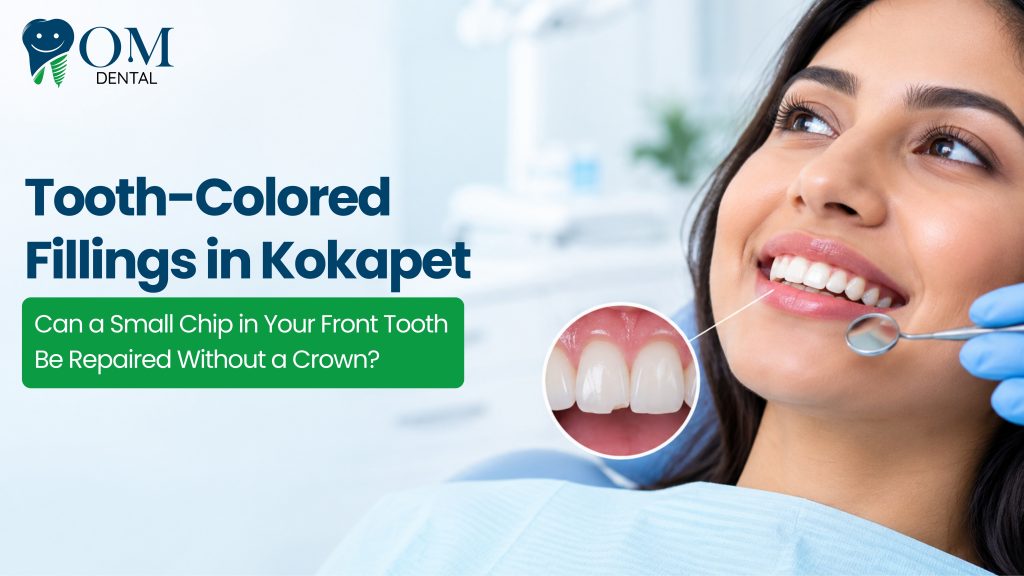
A small chip in a front tooth may seem like a minor dental problem, but it can affect the appearance of your smile and sometimes cause sensitivity or discomfort. Whether the chip happens after biting something hard, an accidental fall, or everyday wear, getting it examined can help you understand the most suitable treatment. If you are considering Tooth-Colored Fillings in Kokapet, a dental consultation can help determine whether a simple filling, composite bonding, or another restorative procedure is appropriate.
The good news is that a small chip in a front tooth can often be repaired using tooth-colored composite material without placing a dental crown. This treatment can restore the tooth’s shape and help it blend naturally with the surrounding teeth. However, the right approach depends on the size of the chip, the condition of the remaining tooth, and whether the damage extends deeper into the tooth.
Can a Small Front Tooth Chip Be Fixed Without a Crown?
Yes, many minor chips can be repaired without a crown. Dentists may use tooth-colored composite resin to rebuild the missing portion of the tooth. This material can be carefully shaped and polished to match the natural appearance of your teeth.
For a small chip, composite bonding is often a conservative option because it usually requires little or no removal of healthy tooth structure. The dentist applies the material directly to the affected area, shapes it to restore the tooth’s outline, and hardens it using a special curing light.
A crown covers the tooth more extensively and may be recommended when the damage is significant or the remaining tooth needs additional protection. Therefore, not every chipped front tooth requires a crown.
You can also learn about crowns and bridges treatment in Kokapet to understand the restorative options available when a tooth needs more extensive coverage.
Common Reasons for a Chipped Front Tooth
Front teeth help you bite food and play an important role in your smile. Although enamel is strong, it can still chip under certain conditions.
1. Biting Hard Foods
Biting hard foods, ice, or other firm objects can put excessive pressure on the edges of your front teeth. This may result in a small chip or a larger fracture, depending on the force involved.
2. Accidental Injury
A fall, sports injury, or accidental impact to the mouth can damage a front tooth. Even when the visible chip appears small, an examination may be needed to check for cracks or injury to the tooth’s root.
3. Teeth Grinding
Repeated grinding or clenching can gradually wear down tooth edges. Over time, weakened areas may become more vulnerable to chipping.
If you grind your teeth during sleep, your dentist may discuss ways to protect your teeth from further damage.
4. Existing Tooth Damage
Tooth decay, large existing fillings, or previous dental injuries can weaken parts of a tooth. In these cases, the dentist needs to assess the remaining structure before recommending a repair.
How Tooth-Colored Fillings Repair a Chipped Tooth?
Tooth-colored composite resin is designed to blend with natural teeth. It can be used to repair selected chips, small fractures, and other minor defects while restoring the tooth’s shape.
The treatment generally involves the following steps.
Step 1: Examination of the Tooth
The dentist checks the size and location of the chip and examines the surrounding teeth and gums. If the injury is significant or there are symptoms suggesting deeper damage, an X-ray or other assessment may be recommended.
Step 2: Selecting a Matching Shade
The dentist selects a composite shade that closely matches your natural tooth colour. Shade selection is particularly important for front teeth because the repair is visible when you smile or speak.
Step 3: Preparing the Tooth Surface
The affected area is prepared so the composite material can bond securely. For many small chips, only minimal preparation may be needed.
Step 4: Applying and Shaping the Composite
The dentist applies the tooth-colored material and carefully shapes it to recreate the missing portion. The aim is to restore a natural outline that fits with the neighbouring teeth.
Step 5: Hardening and Polishing
A special curing light hardens the composite material. The dentist then smooths and polishes the repair and checks how the teeth come together when you bite.
Many small repairs can be completed in a single appointment, although treatment time depends on the extent of damage and the clinical findings.
Benefits of Tooth-Colored Fillings for Front Teeth
Tooth-colored composite restorations offer several advantages when used for suitable cases.
A Natural-Looking Appearance
The material can be matched to the surrounding teeth, making the repair less noticeable. Careful shaping and polishing help the restored area blend with the natural tooth.
A Conservative Treatment Approach
For a minor chip, composite bonding may preserve more healthy tooth structure than a crown. This can be an important consideration when the tooth is otherwise healthy.
A Convenient Treatment Option
Many small composite repairs can be completed in one visit. The exact duration depends on the size of the chip and whether additional treatment is needed.
Restoration of Tooth Shape
The composite can rebuild a chipped edge and smooth an uneven outline. This can improve the appearance of the tooth and help restore its normal contour.
Potentially Lower Treatment Complexity
A small composite repair may involve fewer treatment steps than a crown. However, the cost and suitability of each option depend on the individual tooth and the treatment plan.
When Is a Dental Crown More Appropriate?
Although composite fillings can repair many minor chips, they are not suitable for every type of damage.
A crown may be considered when:
- A large portion of the tooth has broken away.
- The remaining tooth structure is weak or significantly damaged.
- A crack extends beyond the small chipped area.
- The tooth has undergone treatment that leaves it requiring additional protection.
- Previous repairs have repeatedly failed because of the size or position of the damage.
The dentist may also recommend a different treatment if the tooth’s nerve is affected or there is significant decay.
The goal is not simply to cover the damaged area. It is to restore the tooth in a way that suits its condition and helps protect it from further problems.
Tooth-Colored Filling vs Dental Crown
Both treatments can restore damaged teeth, but they serve different purposes.
Tooth-colored filling or composite bonding: Often suitable for small chips and limited areas of damage. It can preserve more natural tooth structure and may be completed in one visit.
Dental crown: Covers a greater portion of the tooth and may be recommended when the tooth needs more extensive restoration or protection.
Treatment duration: Small composite repairs are often completed in one appointment, while crown treatment may involve additional steps or visits.
Maintenance: Both restorations require good oral hygiene and regular dental checkups. Composite can chip or stain over time, while crowns can also wear or develop problems around their margins.
The best option depends on the amount of remaining healthy tooth structure, your bite, and the location and extent of the damage.
How to Care for a Tooth After Composite Repair?
After your chipped tooth has been repaired, a few simple habits can help maintain the restoration.
- Brush twice daily using fluoride toothpaste.
- Clean between your teeth regularly.
- Avoid biting hard objects with your front teeth.
- Do not use your teeth to open packages or tear materials.
- Avoid chewing pens or biting your nails.
- Visit your dentist for routine examinations and polishing when recommended.
- Ask about a night guard if you grind or clench your teeth.
Composite material can become stained or chip over time, particularly when exposed to heavy biting forces or damaging habits. If the repair feels rough, becomes loose, or changes shape, arrange a dental review.
If you have recently injured a front tooth, avoid placing unnecessary pressure on it until it has been examined.
What Should You Do Immediately After Chipping a Tooth?
If you have just chipped a front tooth, rinse your mouth gently with water and avoid biting with the affected tooth. If you can find the broken fragment, keep it in a clean container and take it to your dentist.
If the chipped edge is sharp, avoid touching it with your tongue or lips. Arrange a dental examination to determine whether the damage is limited to the enamel or extends deeper.
Seek prompt dental care if you experience significant pain, persistent sensitivity, bleeding, swelling, or a large fracture. A small-looking chip after an accident may sometimes be associated with deeper damage.
Do not try to repair the tooth at home using household adhesives or other non-dental products.
Why Consider OM Dental for Tooth-Colored Fillings in Kokapet?
Choosing a suitable treatment for a chipped front tooth begins with a careful examination. The dentist needs to assess the damage, determine how much healthy tooth remains, and understand whether the tooth’s inner structures are affected.
OM Dental Clinic in Kokapet, Hyderabad, provides dental care for restorative and general dental needs. During your consultation, the dentist can examine the chipped tooth and discuss whether a tooth-colored filling, composite bonding, a crown, or another procedure is appropriate.
If the chip is small and the tooth is otherwise healthy, a conservative repair may be possible. If the damage is more extensive, the dentist can explain the alternatives and the reasons for recommending them.
Patients can also explore dental crowns and bridges in Kokapet when a tooth needs a more extensive restoration.
Frequently Asked Questions
1. Can a small chip in a front tooth be repaired without a crown?
Yes. Many minor chips can be repaired using tooth-colored composite resin or dental bonding. A dentist must examine the tooth to confirm whether this treatment is suitable.
2. Do tooth-colored fillings look natural on front teeth?
Composite resin is available in different shades and can be selected to match the surrounding teeth. The final appearance depends on shade selection, tooth shape, and the dentist’s finishing technique.
3. How long does a tooth-colored filling take?
A small chip repair can often be completed in one appointment. The duration depends on the extent of the damage and the complexity of the restoration.
4. Can a tooth-colored filling chip again?
Yes. Composite material can chip, wear, or stain over time. Avoiding hard biting habits and attending regular dental checkups can help maintain the repair.
5. Is a crown always stronger than a filling?
A crown provides more extensive coverage and may be more appropriate for a significantly weakened tooth. However, a small chip in a healthy tooth may not require a crown. The treatment should match the extent of the damage.
Book a Dental Consultation at OM Dental in Kokapet
A small chip does not always mean you need a crown. With an appropriate examination, your dentist can determine whether tooth-colored composite material can restore your front tooth while preserving as much healthy tooth structure as possible.
OM Dental Clinic provides dental care in Kokapet, Hyderabad, where you can discuss your concerns and understand the treatment options suitable for your tooth.
Clinic Name: OM Dental Clinic
Location: First Floor, M.N Corner, One, Golden Mile Road, above Pizza Hut, Kokapet, Hyderabad, Telangana 500075
Phone: +91 78421 31303
Website: https://omdentalhyderabad.com/
Contact OM Dental to arrange a consultation and find out whether a tooth-colored filling or composite bonding can repair your chipped front tooth without a crown.