
OM Dental

Jubilee Hills

Mon- Sat - 10AM to 8PM │Sun- 10AM to 7PM

Dental Implants

Dental Braces Treatment in Kokapet

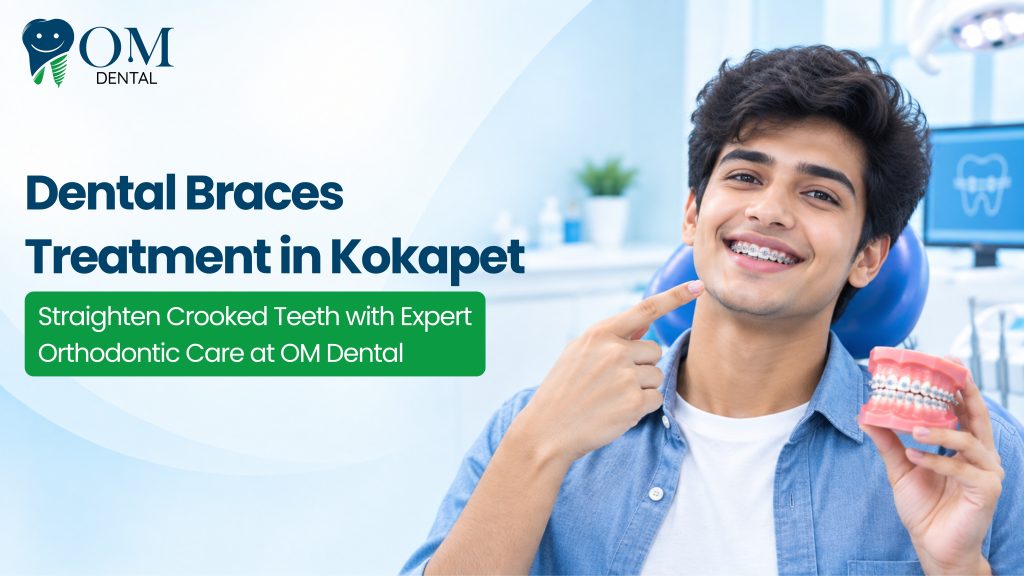
Dental Braces Treatment in Kokapet – Straighten Crooked Teeth with Expert Orthodontic Care at OM Dental

Do you have crooked, crowded, or uneven teeth and want a healthier-looking, more confident smile? If you are searching for Dental Braces Treatment in Kokapet, OM Dental Clinic provides orthodontic care to help improve the alignment of teeth and support better oral function. Braces can gradually move teeth into more appropriate positions and may also help address problems related to crowding, spacing, and bite alignment. OM Dental Clinic in Kokapet, Hyderabad, offers comprehensive dental care using modern technology and a patient-focused approach. With 10+ years of experience, the clinic provides personalized dental treatments based on each patient’s oral health needs, including orthodontic and cosmetic dental care. What Is Dental Braces Treatment? Dental braces are orthodontic appliances used to gradually move teeth into better positions. They apply controlled pressure to the teeth over time, helping improve their alignment. Braces may be recommended for people with: The type of braces and duration of treatment depend on the patient’s age, dental condition, tooth movement required, and overall treatment goals. Before starting treatment, the dentist or orthodontic professional evaluates the teeth and bite to develop an appropriate treatment plan. Why Do People Need Braces? Straight teeth are not only about appearance. Properly aligned teeth can also make daily oral hygiene easier and may support better chewing and overall oral function. Crooked Teeth Crooked teeth can overlap or rotate, making some areas difficult to clean properly. Braces can gradually improve tooth alignment. Crowded Teeth Crowding occurs when there is insufficient space for teeth to align properly. Orthodontic treatment may help create a more organized tooth arrangement. Gaps Between Teeth Some people have noticeable spaces between their teeth. Braces may help close certain gaps depending on their cause and location. Bite Problems Some patients have alignment problems involving the way the upper and lower teeth meet. Orthodontic treatment may be recommended to improve the bite. Smile Appearance Better tooth alignment can improve the overall appearance of the smile and may increase confidence. Different Types of Dental Braces There are different orthodontic options available today. The appropriate option depends on the patient’s dental condition and treatment requirements. Traditional Metal Braces Traditional metal braces use brackets and wires to gradually move teeth. They are a commonly used orthodontic option and can be suitable for a wide range of alignment problems. Ceramic Braces Ceramic braces work similarly to traditional braces but use tooth-coloured or less noticeable brackets. They may be preferred by patients who want a more discreet appearance. Self-Ligating Braces Self-ligating braces use a specialized bracket system that holds the archwire without conventional elastic ligatures. Depending on the case, they may be considered as an orthodontic treatment option. Clear Aligners Clear aligners are removable transparent trays designed to gradually move teeth. They are different from traditional braces and may be suitable for selected cases. OM Dental also offers Invisalign treatment for patients who may be candidates for clear aligner therapy. How Does Dental Braces Treatment Work? Braces treatment usually takes place over several stages. Step 1: Initial Dental Evaluation The dentist evaluates your teeth, gums, bite, and overall oral health. Dental photographs, X-rays, scans, or other diagnostic records may be recommended depending on the case. Step 2: Treatment Planning After evaluating your teeth, the dental professional develops a personalized treatment plan. This may include selecting the type of braces and determining the approximate treatment duration. Step 3: Placement of Braces If traditional braces are selected, brackets are attached to the teeth and connected with orthodontic wires. Step 4: Regular Adjustments Patients usually need regular follow-up appointments. During these visits, the orthodontic appliances may be adjusted to continue controlled tooth movement. Step 5: Monitoring Progress Your dentist monitors tooth movement and bite alignment throughout the treatment. Step 6: Retention After active orthodontic treatment is completed, a retainer may be recommended. Retainers help maintain the new position of the teeth and reduce the risk of unwanted movement. How Long Does Braces Treatment Take? The duration of braces treatment is different for every patient. Factors that can affect treatment time include: Some cases may require a shorter treatment period, while more complex alignment problems can take longer. Your dentist can provide a more personalized estimate after examining your teeth. Are Dental Braces Painful? Braces treatment is generally associated with pressure or mild discomfort, especially after braces are initially placed or adjusted. You may notice temporary: These symptoms often improve as the mouth adjusts to the braces. If you experience severe or persistent discomfort, you should contact your dental professional. What Foods Should You Avoid With Braces? If you have traditional braces, certain hard or sticky foods can damage brackets or wires. It is generally helpful to be careful with: Cutting harder foods into smaller pieces can make eating easier and reduce unnecessary pressure on orthodontic appliances. Your dentist will provide specific dietary instructions based on your braces and treatment plan. How to Maintain Oral Hygiene During Braces Treatment Maintaining good oral hygiene is especially important while wearing braces because food particles and plaque can collect around brackets and wires. Follow these habits: Good oral hygiene during orthodontic treatment helps keep the teeth and gums healthy. If you need professional cleaning during your orthodontic treatment, OM Dental also provides scaling and polishing to help remove plaque and tartar. What Happens After Braces Are Removed? Getting your braces removed is an important milestone, but orthodontic treatment does not necessarily end there. Your dentist may recommend a retainer to help maintain the corrected tooth positions. Retainers can be removable or fixed depending on your individual treatment requirements. Following your dentist’s instructions about retainer use is important because teeth can naturally shift over time. Benefits of Dental Braces Treatment Dental braces can provide several potential benefits when they are recommended for the patient’s specific orthodontic needs. Improved Tooth Alignment Braces can gradually move teeth into more appropriate positions. Easier Cleaning Better-aligned teeth may make brushing and flossing easier in areas that were previously difficult to reach. Improved Bite Orthodontic treatment may help correct certain

Dental Braces Treatment in Kokapet – Straighten Crooked Teeth with Expert Orthodontic Care at OM Dental Read More »

Best Dental Implants in Kokapet Hyderabad

Best Dental Implants in Kokapet, Hyderabad – OM Dental

Missing teeth can affect more than just your smile. They can make chewing difficult, affect speech, change the appearance of your face, and sometimes cause neighboring teeth to shift into the empty space. Dental implants are one of the modern options available for replacing missing teeth and restoring both function and appearance. If you are searching for the Best Dental Implants in Kokapet, Hyderabad, OM Dental offers implant treatment with a focus on personalized care, modern dental technology, and comfortable treatment. The clinic provides dental implants as part of its restorative and comprehensive dental care services. What Are Dental Implants? A dental implant is a small artificial tooth root that is placed into the jawbone to support a replacement tooth. Unlike removable dentures, an implant is designed to provide a stable foundation for a dental crown, bridge, or other restoration. Dental implants are generally made using biocompatible materials such as titanium. Once the implant is placed, the surrounding bone can gradually integrate with it. This process helps create a stable foundation for the replacement tooth. Dental implants may be considered when a person has lost a tooth because of: The suitability of implants depends on factors such as bone condition, gum health, overall oral health, and the individual treatment plan. Why Choose Dental Implants for Missing Teeth? There are several ways to replace missing teeth, including bridges and dentures. Dental implants offer certain advantages because they are designed to replace the missing tooth root as well as the visible tooth. Some potential benefits include: OM Dental describes dental implants as strong replacements for natural teeth and explains that implants can bond with the jawbone after placement. Who May Need Dental Implants? Dental implants may be suitable for adults who have one or more missing teeth and want a stable replacement option. However, not every patient is automatically a candidate for implant treatment. A dentist will usually evaluate: A detailed dental examination and appropriate imaging can help the dentist determine whether implants are suitable and what type of restoration is required. Why Choose OM Dental for Dental Implants in Kokapet? Choosing an experienced dental team is an important part of implant treatment. OM Dental provides dental implant services in Kokapet and has a team that includes specialists in prosthodontics and implantology. Dr. M. Omsree Reddy is listed by OM Dental as a BDS, MDS Prosthodontist & Implantologist, with expertise in implantology, smile design, crowns, veneers, dentures, and full-mouth rehabilitation. Experienced Implant Care Dental implant treatment requires careful planning because the implant needs to be positioned appropriately within the jawbone and coordinated with the final restoration. A specialist-led approach can help create a treatment plan based on the patient’s individual dental requirements. Modern Dental Technology OM Dental focuses on advanced dental care and modern equipment to support diagnosis and treatment planning. The clinic describes its approach as combining advanced technology with personalized patient care. Personalized Treatment Planning Every missing-tooth case is different. The number and location of missing teeth, bone condition, gum health, and desired outcome can all affect the recommended treatment. OM Dental evaluates individual requirements before recommending an appropriate implant solution. Comprehensive Dental Services OM Dental provides several dental services alongside implants, including crowns and bridges, root canal treatment, Invisalign, wisdom tooth removal, gum therapy, teeth whitening, and smile designing. This allows patients to address different oral health and restorative needs at the same clinic. Dental Implant Treatment Process at OM Dental The dental implant process can vary from patient to patient. A typical treatment may include several stages. 1. Dental Consultation and Examination The first step is a consultation with the dentist. Your dental history, missing tooth or teeth, gum health, and overall oral condition are assessed. The dentist may also recommend dental imaging to evaluate the jawbone and determine the appropriate implant position. 2. Treatment Planning After the examination, the dentist develops a customized treatment plan. This plan may include the number of implants required, the type of restoration, and the expected treatment timeline. If there is insufficient bone to support an implant, additional procedures may sometimes be required before or during implant treatment. 3. Implant Placement During implant surgery, the implant is carefully positioned into the jawbone. Local anesthesia is used during the procedure to help keep the patient comfortable. The implant then needs time to integrate with the surrounding bone. 4. Healing and Osseointegration The healing period allows the implant to become stable within the jawbone. This process, known as osseointegration, is an important part of implant treatment. The duration can vary depending on the patient’s bone quality, healing response, and treatment requirements. 5. Placement of the Replacement Tooth Once the implant has adequately healed and is ready for restoration, a custom-made dental crown or other suitable restoration can be attached. The restoration is designed to provide a natural appearance and restore chewing function. Benefits of Dental Implants Dental implants can offer several functional and aesthetic benefits when they are appropriately planned and maintained. Natural-Looking Appearance The replacement tooth can be designed to match the surrounding teeth in shape, size, and appearance. Improved Chewing A stable implant-supported restoration can help restore chewing function compared with having an untreated gap. Helps Maintain Jawbone When a natural tooth is lost, the bone supporting that tooth can gradually change. An implant replaces the tooth root and can provide stimulation to the surrounding bone. Supports Healthy Neighboring Teeth Unlike a conventional bridge, an implant-supported replacement does not necessarily require preparation of adjacent healthy teeth. Your dentist can determine the most appropriate option for your situation. Long-Term Option Dental implants can provide long-term tooth replacement when they are properly planned, maintained, and supported by good oral hygiene and regular dental care. Are Dental Implants Painful? Many patients are concerned about discomfort during implant surgery. Local anesthesia is used during the procedure to numb the treatment area. Some swelling, tenderness, or discomfort may occur after implant placement. Your dentist will provide specific aftercare instructions and recommend appropriate medication when required. The

Best Dental Implants in Kokapet, Hyderabad – OM Dental Read More »

Scroll to Top